






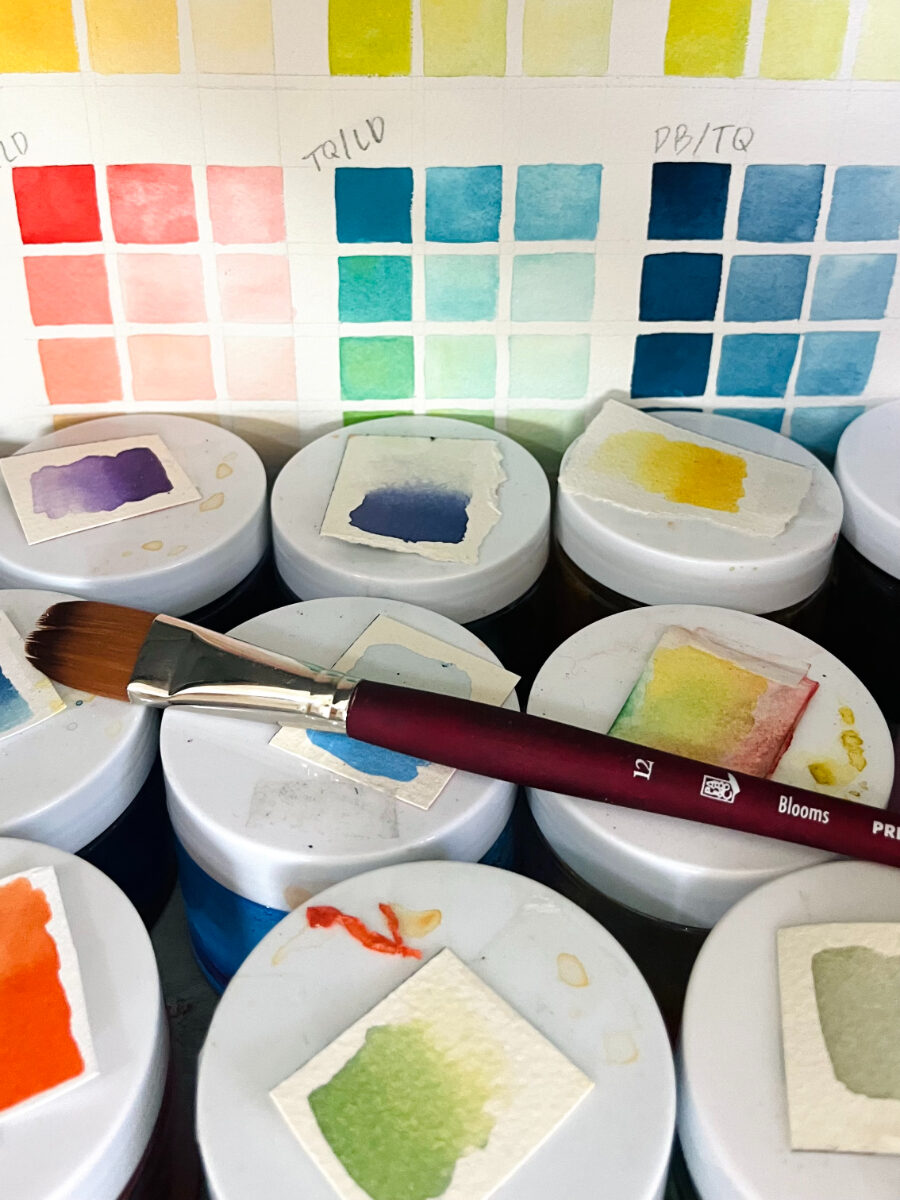
I remember the first time I gave myself a simple art challenge with watercolor. I was standing at my desk with way too many brushes spread out in front of me. Rounds, flats, Filberts, tiny detail brushes. I kept switching between them, trying to make the painting “better.”
Instead, I made it worse.
The painting felt stiff. I was overthinking every stroke. I was fussing with tiny details that didn’t matter.
So I tried something different. I picked up one brush and told myself I couldn’t switch it.
That tiny decision turned into one of the most helpful watercolor exercises I’ve ever done. It forced me to slow down, notice my watercolor brush strokes, and respond to what was happening on the page. The painting felt more alive. My style felt looser.
And honestly, it was more fun.
If you’ve been feeling stuck or overly perfectionistic, this art challenge might be exactly what you need.

Why a One-Brush Art Challenge Is About Freedom, Not Limitation
At first, a one-brush art challenge might sound restrictive. But in my experience, it’s actually the opposite.
When you remove choices, you remove pressure.
Instead of worrying about the “right” tool, you start focusing on the act of painting itself. That shift opens the door to more intuitive watercolor and a more expressive painterly style.
Here’s what often happens when you simplify your tools:
- You reduce overwhelm
- You stop second-guessing every decision
- You pay more attention to the brush itself
- You start responding instead of controlling
And the best part? You don’t need special watercolor supplies to do this.
Any brush in your stash will work. A round brush, a flat, a Filbert. Even something you rarely use.
The goal of this art challenge isn’t to make perfect watercolor paintings. It’s to loosen up and explore.
If you love creative exercises that help you experiment and discover new watercolor painting ideas, my Creativity Playbook is filled with prompts and mindset shifts designed to spark playful experimentation.
The Simple Rules of the One-Brush Art Challenge
One of my favorite things about this art challenge is how simple it is.
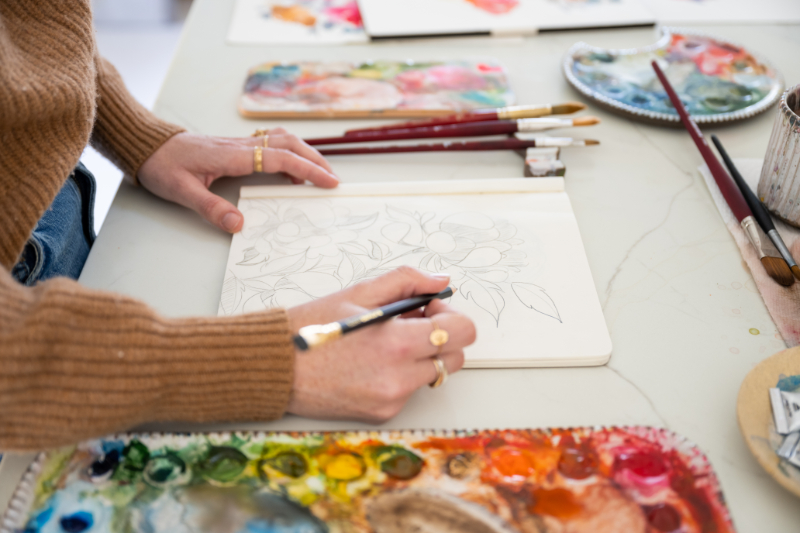
You don’t need a complicated setup or hours of time. Just grab your watercolor sketchbook (I’ve got a great one!), one brush, and start playing.
Here are the only rules:
- Choose one brush from your current art supplies
- Paint the entire piece without switching brushes
- Paint any subject you want
- Set a timer for 15–30 minutes
- Focus on exploration, not results
That’s it.
You can try florals, abstract watercolor, landscapes, or even simple watercolor doodles. The subject doesn’t matter nearly as much as the process.
This is one of my favorite watercolor practice ideas because it shifts your attention away from perfection and toward curiosity.
And curiosity is where growth happens.
Looking for ideas on what to paint for your art challenge? Head over to my YouTube channel where I share tons of beginner-friendly watercolor tutorials and simple painting ideas to help you practice, loosen up, and keep your creativity flowing.

What Happens When You Commit to One Brush
Something interesting happens when you stick with one brush for an entire painting.
You start paying attention to things you might normally ignore.
Instead of switching tools, you begin exploring what the brush can actually do.
You notice how:
- Pressure changes the thickness of a stroke
- The brush angle affects shapes
- The water-to-paint ratio changes the texture
- Different movements create different expressive brush strokes
These little discoveries naturally lead to looser work.
You stop fussing with tiny details and start responding to the marks on the page. That’s when loose watercolor paintings begin to emerge and growth sneaks in quietly.
Seeing One Brush Create Many Different Marks
One of the biggest lessons from this art challenge is realizing that a single brush can create a huge variety of marks.
If you’ve ever thought you needed more tools to improve your watercolor techniques, this might change your mind.
Here’s a quick example using a Filbert brush.
In this demo, you can see how one brush produces many different effects.
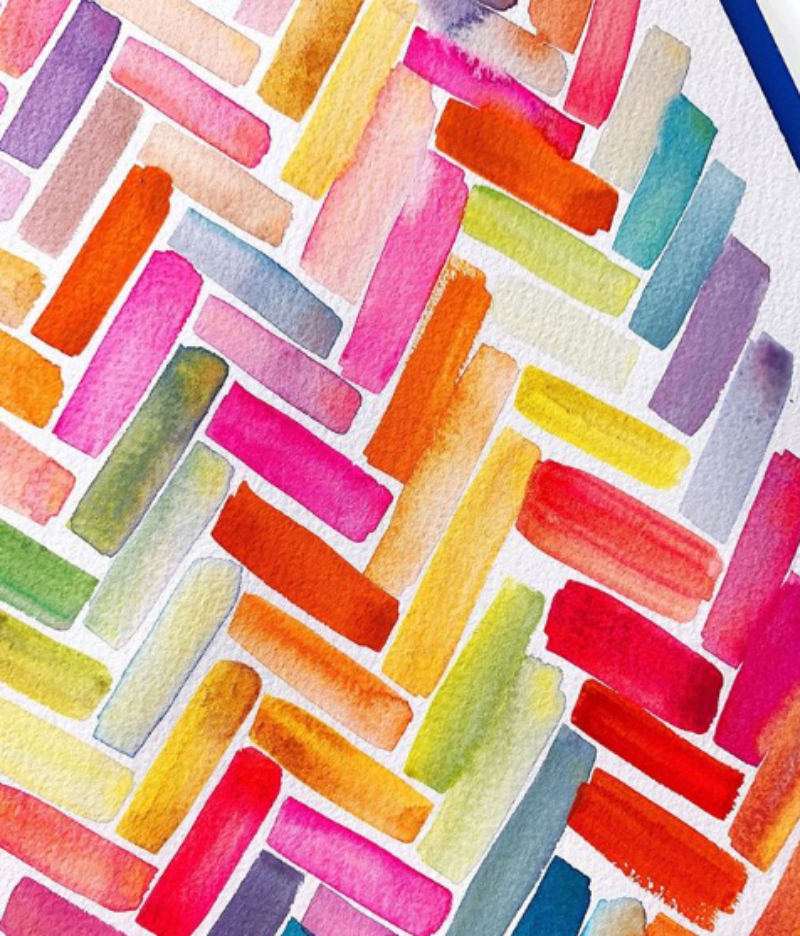
With small adjustments, the brush creates:
- Broad strokes
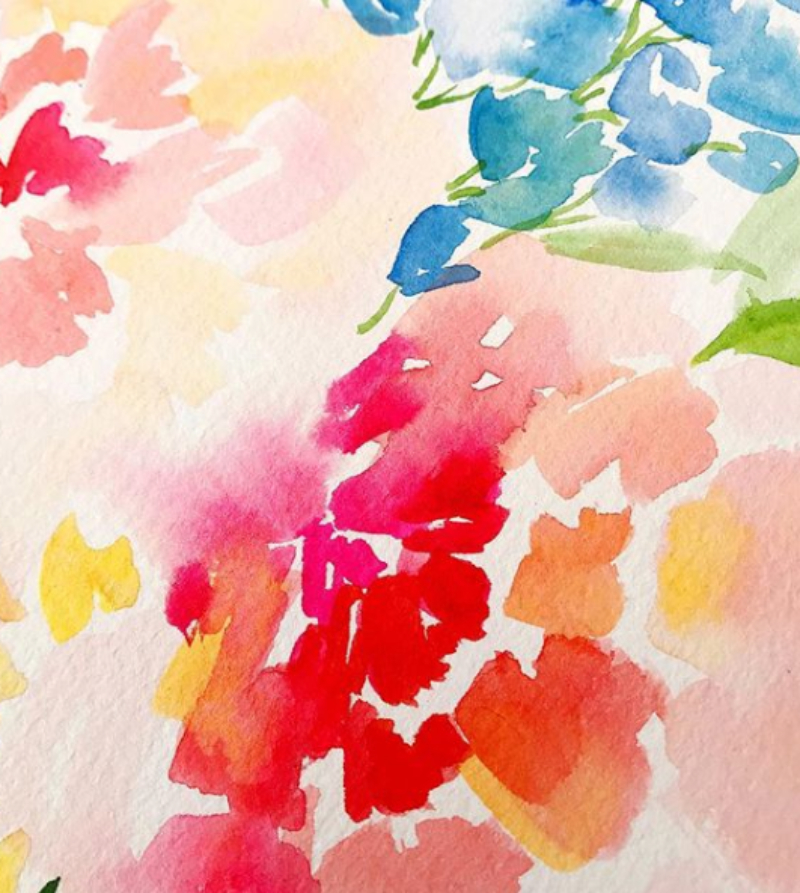
- Delicate petal shapes
- Leaves and organic forms
- Soft layered textures
This is exactly why I love exercises like this art challenge. It reminds us that tools don’t create the artwork.
Artists do.
Whether you’re using a round brush, a flat, or a Filbert, the real magic comes from how you move it.
Once you start experimenting with your watercolor brush strokes, the possibilities open up.
Using the Brush You Have in Unexpected Ways
Another fun part of this art challenge is discovering how flexible your brush really is.
Most of us only use a small portion of what our brushes can do.
Watch this example using a Mottler brush.
This video explores simple ways to expand your watercolor techniques using one tool.
Instead of treating the brush as a single shape, you begin experimenting with:
- The edge of the brush
- The corner
- Light pressure vs heavy pressure
- Dragging the brush sideways
Suddenly, that one brush creates dozens of different marks.
When I’m doing this art challenge, I like to play with small experiments like:
- Holding the brush further back on the handle
- Painting with the side of the bristles
- Turning the brush while making a stroke
Letting shapes emerge naturally often leads to surprising watercolor art ideas.
Sometimes those unexpected marks turn into my favorite watercolor artwork.
Common Feelings During the One-Brush Art Challenge (Totally Normal)
If you try this art challenge, you might feel a little uncomfortable at first.
That’s completely normal.
The key is staying with the process just a little longer. That moment of discomfort is often where creative breakthroughs happen.
Instead of trying to control the painting, let it become a form of watercolor zen.
Let the marks happen.
Let the brush surprise you.

What This One-Brush Art Challenge Teaches You Long-Term
This simple art challenge can teach you more than you might expect.
Over time, it builds some incredibly valuable skills.
You start developing:
- Better brush confidence
- Stronger shapes and movement
- A deeper understanding of watercolor brush strokes
- Less dependency on tools
- More trust in your instincts
Those skills carry into every painting you create.
Even when you return to using multiple watercolor brushes, your approach feels more relaxed and intentional.
Exercises like this are wonderful for building brush confidence. In my book Everyday Watercolor, I guide artists through foundational strokes and patterns that help strengthen brush control and creative freedom through approachable watercolor tutorials.
Try the One-Brush Art Challenge Again (Yes, Again!)
The real magic of this art challenge appears when you repeat it.
The first attempt is about exploration. The second or third attempt is where you start noticing real progress.
Here are a few ways to try the challenge again:
- Use the same brush, but paint a different subject
- Use the same brush, but change the mood or color palette
- Limit yourself to two or three colors
- Try one brush painting with only abstract shapes
These small variations create endless watercolor painting ideas and fresh painting ideas for your sketchbook.
I always recommend documenting the experience rather than judging the result. Flip back through your watercolor sketchbook and notice how your brush control improves over time.
If you enjoy exercises like this, my Everyday Watercolor Sketchbook is full of prompts and watercolor projects designed to help artists loosen up and build skills through simple creative challenges.

Start Your One-Brush Art Challenge Today
Here’s the truth most artists eventually learn.
You don’t need new watercolor supplies to grow.
Skill comes from curiosity, repetition, and a willingness to experiment.
So here’s my invitation.
Watch the videos for a little watercolor inspiration.
Pick one brush from your stash.
Open your sketchbook.
Then start your own one-brush art challenge today.
If you'd like guided video lessons that dive deeper into watercolor techniques and creative exercises, the Everyday Watercolor Companion Course expands on the concepts from my watercolor books with step-by-step demonstrations and encouraging watercolor tutorials designed to help you build confidence with every brushstroke.








+ show Comments
- Hide Comments
add a comment