







Hey friend! Since moving to Portugal, I've been spending a lot of time painting outdoors. And honestly? Plein air watercolor has become one of the most rewarding parts of my creative routine.
But let me be real. The first time I packed up my supplies and sat down outside to paint, I was a mess. It was awkward, humbling, and one of the best creative experiences I've ever had.
If you've been curious about painting outdoors but feel a little intimidated, you're not alone. So today, I'm sharing my top tips for making your plein air watercolor sessions feel less overwhelming and way more fun.
What Makes Plein Air Watercolor So Special (and So Intimidating)
Plein air watercolor simply means painting with watercolor outside, on location, instead of working from a photo at your desk. That's it. Nothing fancy.
But here's what makes it special. When you paint outdoors, you're responding to real light, real color, and real atmosphere. Everything feels more alive because you're in the middle of it.
Now, the flip side. It can feel a little scary at first. Common worries include the light changing before you finish, people watching you paint, weather not cooperating, and feeling like your painting doesn't look like “real art.”
All totally normal. And here's the reframe I want you to hold onto: success isn't about making a masterpiece. It's about showing up, observing, and putting paint to paper.

Tip #1: Keep Your Setup Simple and Portable
One of the biggest mistakes I see beginners make is overpacking. If your bag is heavy and your setup is complicated, you're less likely to go out and paint.
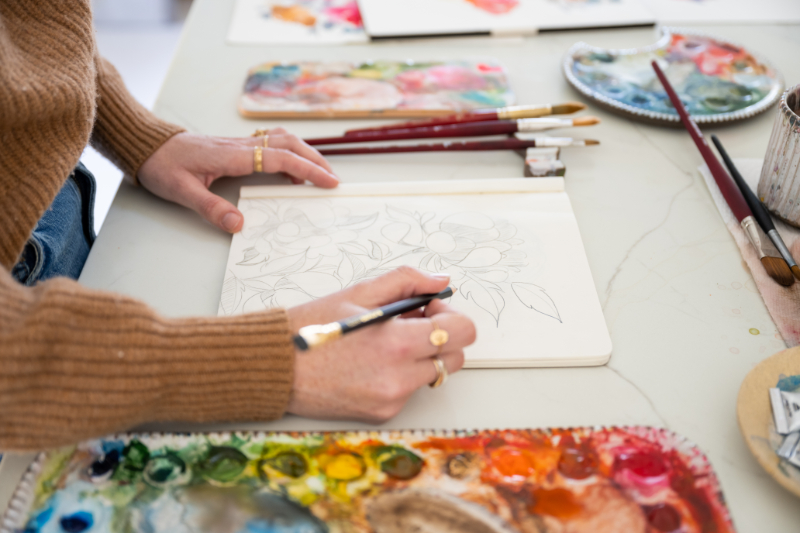
Here's what I usually bring:
- A sketchbook (I love using my Everyday Watercolor Sketchbook for outdoor sessions)
- A limited palette of 4 to 6 colors
- One or two brushes
- A small water container
- A rag or paper towel
You don't need a full easel or a giant supply kit. A backyard, a park bench, or even a balcony works perfectly. The simpler your setup, the more freedom you'll feel.
Tip #2: Start with Big Shapes, Not Details
When you sit down to paint outdoors, it's tempting to jump straight into the details. But starting with big shapes first will make your painting feel so much stronger.
Block in the largest forms you see. The tree canopy. The roofline. The hillside. Use broad, loose strokes and don't worry about perfection. From there, let texture do the talking. A dry brush stroke can suggest leaves without painting every single one. Build depth and values after the main shapes are down.
The key takeaway? Capture the feeling of the scene, not every leaf on the tree.
I walk through this exact approach in my Orange Tree plein air video, where you can watch me block in shapes and build from there. You can watch it below.
Tip #3: Let Color and Light Guide Your Choices
This one changed everything for me. When you paint outside, the colors you see are constantly shifting. And that's actually a gift, not a problem.
Instead of trying to copy exact colors, pay attention to the shifts happening around you. Notice where the light is warm and where the shadows feel cool. Mix based on what you actually see, not what you think something “should” look like. Let wet on wet blends happen naturally on the paper. Use light and shadow to suggest form instead of drawing hard outlines.
Trust your eyes more than a reference photo.
When I painted a plum tree outdoors, I noticed colors in the bark and leaves I never would have seen from a photo. You can watch that full process in my Plum Tree plein air video below!
Tip #4: Use Your Brush in Lots of Different Ways
Here's something that might surprise you. You don't need a bunch of different brushes for plein air watercolor. You just need to learn what one brush can do.
Small changes make a big difference:
- Use the edge of your brush for thin lines
- Press the full belly down for wide washes
- Change your angle for different textures
- Vary your pressure from light to heavy within a single stroke
Watch my Mottler brush video below to see this in action. It's wild how many marks a single brush can create. And if you love the Mottler brush as much as I do, you can grab one here.
Love the idea of seeing how far one brush can take you? My blog post “Try This One-Brush Art Challenge” is a fun challenge that builds brush confidence and helps you loosen up fast. Check it out here!
Tip #5: Embrace the Environment (and Imperfection)
Let's talk about the stuff nobody warns you about.
The wind will blow your paper. The sun will create glare on your palette. You'll sit on uneven ground and your water cup might tip over. Bugs might land on your wet paint. And all of that is totally fine.
Your outdoor paintings don't need to be portfolio-worthy. They're studies, experiments, and snapshots of a moment. Some of my favorites are messy, unfinished, and a little wild. But they hold so much energy because I was really present when I made them.
I filmed two sessions that show exactly what I mean. Watch the lighthouse cliff painting, and check out the cliff landscape video for another approach to painting outside in real conditions.
The experience is the win. Always.
Tip #6: Try Mixed Media if It Helps You Loosen Up
If you feel stuck during your outdoor sessions, here's a fun trick: bring along one extra tool. A colored pencil. An oil pastel. Something you can layer on top of or underneath your watercolor.
Mixed media can help you add texture, make playful and expressive marks, leave gaps that let layers show through, and break free from the need for control.
I recently painted nasturtiums outdoors using watercolor and mixed media, and the result felt so alive. See the full process in my Nasturtium mixed media plein air video below.
Curious about working with oil pastels? My Easy Oil Pastel Landscape Tutorial for Beginners on YouTube is a great starting point. And for a deeper look at how different mediums compare, I wrote a full breakdown called “Oil Painting vs Watercolor: The Real Differences” on the blog. Read on here!
Tip #7: Know When to Stop (and Walk Away Happy)
This might be the hardest tip on the list. But it's one of the most important.
When you're painting outdoors, it's easy to overwork things. The light shifts and you start chasing it. You add one more layer, then another. Before you know it, the freshness is gone.
Here's how I handle it:
- I set a loose time limit before I start (usually 30 to 45 minutes)
- I take breaks to step back and look from a distance
- I remind myself that an unfinished painting is not an unsuccessful painting
Give yourself permission to walk away happy, even if the painting isn't finished.

What a “Successful” Plein Air Watercolor Session Really Is
A successful session isn't measured by the painting you bring home. It's measured by the time you spent observing. Noticing how light hit a wall. How shadows moved across the ground. How colors looked completely different in person than on a screen.
Every plein air watercolor session builds your confidence. Even the ones that feel awkward.
So here's my challenge to you. Paint outside more often, even if it's just your backyard. Come back to these tips when you need a refresh. And watch the videos I linked for inspiration, not pressure.
If you're looking to build a stronger foundation with your watercolor techniques, brush control, and creative confidence, my course The Art Within walks you through all of it. It's like going to art school, but without the pressure and at your own pace.
Now go grab your supplies, find a spot outside, and create something. Even if it sucks.
Want my full list of recommended supplies and beginner-friendly techniques? Grab my free Complete Beginner's Guide to Watercolor e-book. It's 40 pages of everything you need to get started.









+ show Comments
- Hide Comments
add a comment