






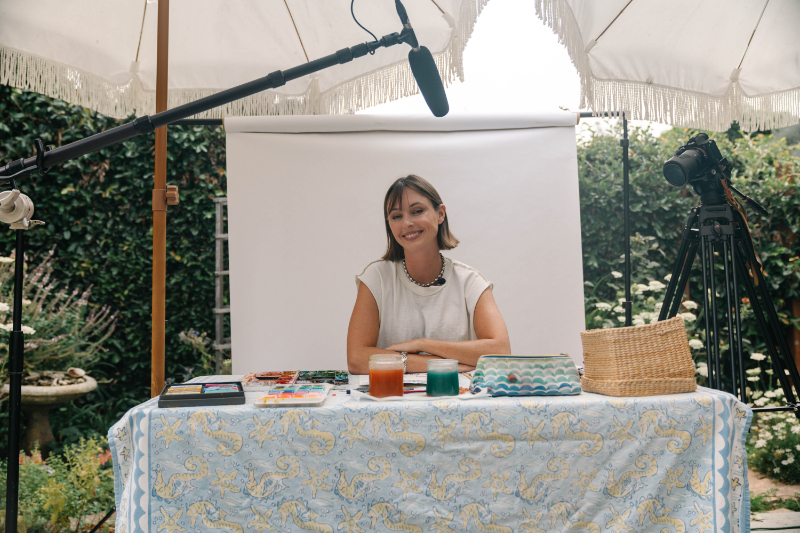
The easiest way to paint watercolor landscapes is to learn a few small objects (like rocks, trees, clouds, and waves) and then combine them into one scene. You don't have to master a whole landscape all at once.
Hey friend! If a full landscape feels like way too much, I get it. I used to overthink every single scene. Then I started thinking in building blocks instead of whole paintings, and it all got so much easier.
So here's my promise. Learn these 10 elements, and you'll have a toolkit for endless watercolor scenery. Mountains, deserts, beaches, meadows… you pick!
Who Is Jenna Rainey?
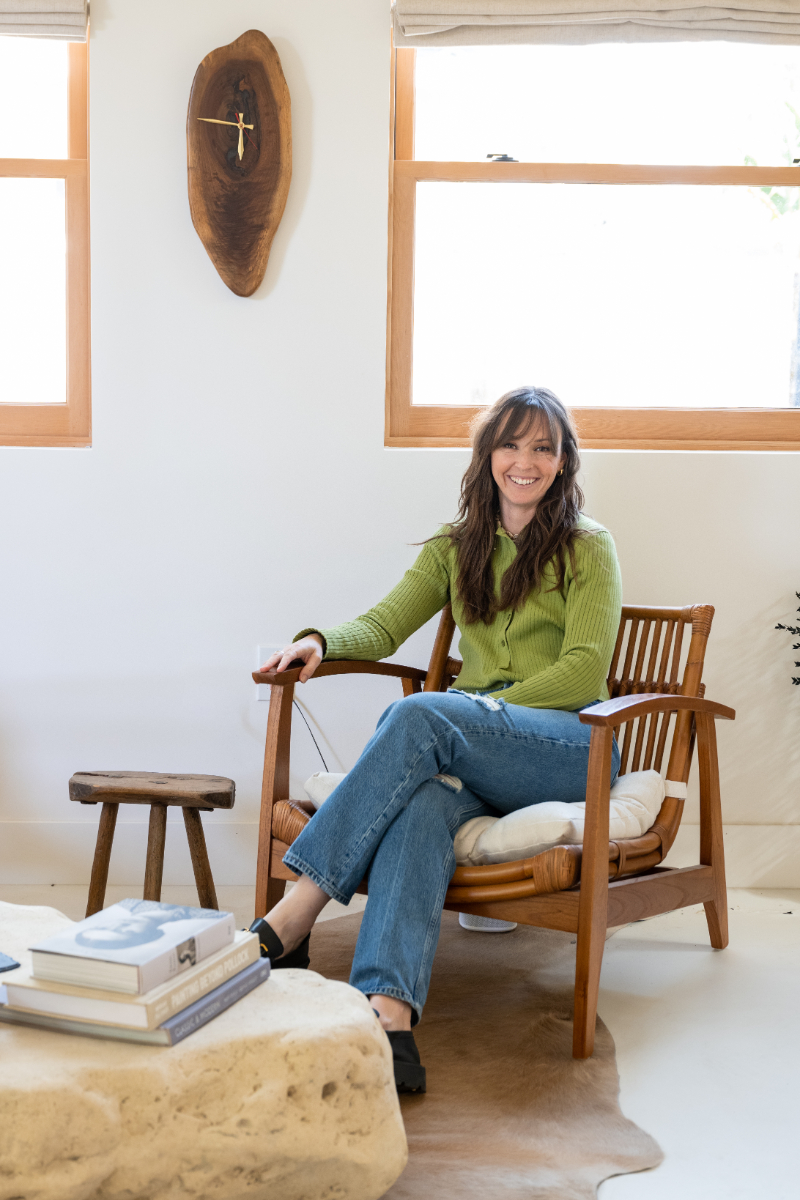
I'm Jenna! I'm a mom, a self-taught watercolor artist, and the author of the best-selling Everyday Watercolor book series (published by Penguin Random House). I've been teaching since 2012, and I'm hell-bent on teaching everyone how to find their inner creative voice.
Want to learn with me more closely? Explore my courses or say hi on Instagram. Let's be friends!
Why Should You Learn Landscapes in Small Pieces?
Small pieces are easy to practice and easy to repeat. Once you can paint a rock, a tree, and a cloud, you can arrange them in all kinds of ways.
Think of these 10 elements as your landscape vocabulary. Words build sentences. Elements build scenes.
One idea connects all of them: value control. Things up close are bold and detailed. Things far away are soft and muted. Keep that in mind as you go, because we'll come back to it.
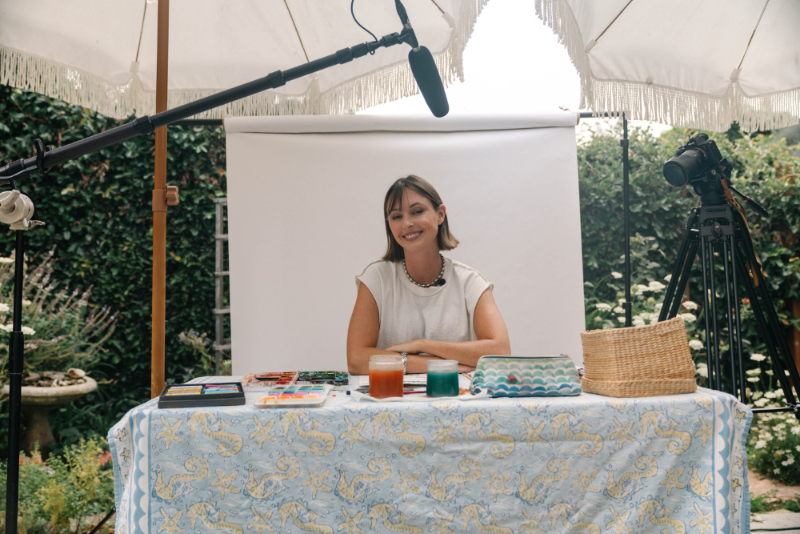
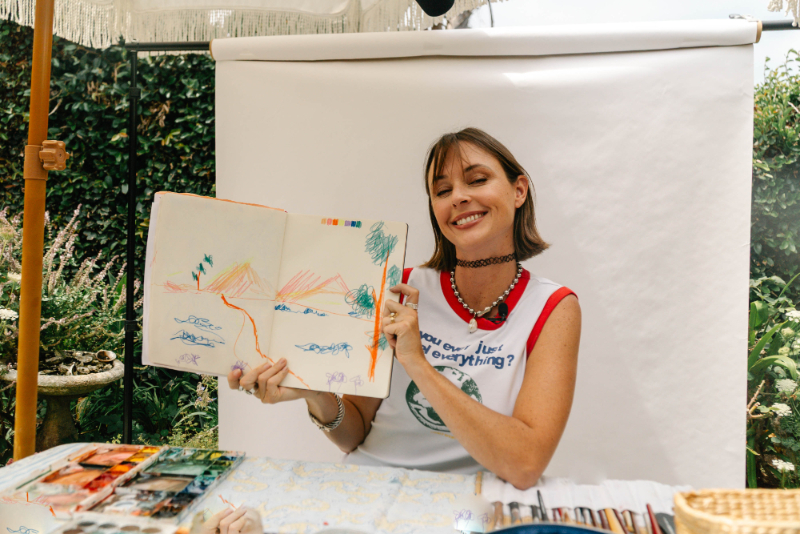
Paint along with me: This post is your quick reference card for my full video, How to Watercolor TEN Easy Objects For Your Full Landscape Paintings. Pull it up and paint with me!
How Do You Paint the 10 Easy Landscape Objects?
Land and Ground
1. Rocks
Rocks are easy to overwork. Mix burnt umber and mars black for a warm gray-brown. Leave small patches of white paper for highlights. Then drop darker paint into the wet shadow side (that's the wet on wet technique) so it blends softly.
Tip: A few confident strokes look better than lots of fussy ones.
2. Mountains
Hold your brush at about a 25-degree angle. Drag the side of it in a zig-zag motion to get jagged peaks fast. For watercolor mountains in the distance, use lighter, softer paint so they fade back.
Want more practice? Try my simple watercolor mountains tutorial.
Trees and Plants
3. Evergreen Trees
Paint bushy branches that angle downward and get wider toward the bottom. Add a darker layer on one side for depth. Leave tiny gaps of white paper if you want a snowy look (instant cozy cabin vibes).
4. Cypress Trees
These tall, skinny trees are common in Southern Europe. Paint a long oval shape, then soften the edges with a dry brush. They give any scene a Mediterranean feel.
5. Palm Trees
Palms are all about the flick. Use quick, loose strokes that spring out from the top of the trunk. They make great background elements in ocean scenes. (As a Southern California girl, palms feel like home to me.)
For more watercolor trees, check out my Painting Trees tutorial below.
6. Cacti
For desert watercolor scenery, try a quick saguaro. Paint a tall column with one or two arms that bend upward. Saguaros grow in the Sonoran Desert (Arizona and northwest Mexico), so they instantly read as “desert.”
Try my sunset desert tutorial or my potted cacti tutorial.
Ground Cover and Texture
7. Wildflowers
Use loose zig-zag strokes of green for stems and leaves. Then tap in little dots of warm color (yellows, oranges, and pinks are lovely). Don't plan every bloom. Loose is the goal!
Here's my full watercolor wildflowers tutorial, and Everyday Watercolor Flowers has tons more.
8. Tall Grass
Start with a green gradient for your base. Then add C-curve strokes on top, inspired by the way Vincent van Gogh painted grass and fields.
Sky and Water
9. Clouds
You paint the sky around the clouds, not the clouds themselves. (This is called painting the negative space.) Press a flat brush on its side and let the paper texture break up your stroke. That's what makes clouds look soft and puffy.
For more, try my three easy watercolor skies.
10. Water and Waves
This one takes the most time, so be patient with yourself. Here's how to paint water in three steps:
- Paint a deep blue gradient.
- Layer Z-shaped strokes to build the waves.
- Add white gouache on top for foam highlights.
Want to learn how to paint ocean scenes in more detail? My book Everyday Watercolor Seashores covers waves, shells, sea life, and watercolor beach scenes.
How Does Value Control Create Depth?
Value means how light or dark a color is. In a watercolor landscape, value tells the viewer what's close and what's far away.
- Close up: darker, brighter, and more detailed
- Far away: lighter, softer, and less detailed
Try this quick test. Paint the same rock twice. Make the first one bold, with crisp edges and texture. Make the second one pale and soft, with almost no detail. Put them side by side, and the first rock looks closer.
This is what turns a flat painting into one with real depth.
How Do You Combine These Objects Into a Full Landscape?
Here's your challenge: pick 3 or 4 elements and combine them into one small painting. A postcard size is perfect (low pressure, quick to finish).
A few combos to get you started:
- Alpine scene: mountains + evergreens + clouds
- Tropical scene: palm trees + water + clouds
- Desert scene: cacti + mountains
- Meadow scene: wildflowers + tall grass + clouds
Work from back to front. Paint the sky first, then the far-away elements, then the foreground.
This approach helps with plein air watercolor too. When you're painting outside, you can break what you see into the same building blocks.

What Mistakes Should You Avoid?
- Overworking texture. Rocks and grass look best with a few sure strokes. Too much fiddling turns them muddy.
- Making the background too bold. Bright, detailed background elements flatten your painting.
- Forgetting white space. It's hard to get clean paper white back once you paint over it. Plan your highlights for clouds, rocks, and water early.
Made a mistake anyway? Totally normal! Here's my full guide on how to fix watercolor mistakes.
Frequently Asked Questions
What should you paint first in a watercolor landscape?
Start with the sky and the farthest elements, then work toward the front. Watercolor usually goes from light to dark, so lighter background layers go down first. (I break this down in Painting Watercolor Light to Dark.)
What supplies do you need for watercolor landscapes?
You'll need watercolor paper, a round brush, a flat brush, watercolor paints, white gouache, two jars of water, and a paper towel. See the exact supplies I love on my favorites page.
Are watercolor landscapes good for beginners?
Yes! Breaking a landscape into small objects makes it beginner friendly. If you're brand new, start with my free 2-hour Beginner's Guide to Watercolor on YouTube.
Where can I find more landscape tutorials?
You can find free landscape tutorials on my YouTube channel. Want even more? My Patreon community has 50+ exclusive tutorials, plus ad-free videos. Just sayin'.
Start With One Element This Week
You don't need to paint a perfect landscape today. You just need to practice one building block. Pick a rock, a cloud, or a wave, and paint it a few times this week. Then add another!
Remember, every “meh” practice painting is teaching your hand something new.
Ready for more? Grab my free Complete Beginner's Guide to Watercolor e-book. It's 40 pages of supplies, techniques, color theory, and composition. And if you want me right there with you, my Everyday Watercolor Companion Course walks you through landscapes, flowers, sea life, and more.
Now go paint something, friend!










+ show Comments
- Hide Comments
add a comment