




Hey friend. Let's talk about the thing that keeps showing up in your feed.
You scroll past a painting that stops you cold. The color is gorgeous. The composition is perfect. Then you check the caption and it says “made with Midjourney,” and something in your stomach drops a little. Maybe you feel confused. Maybe you feel a tiny bit deflated, like you just spent forty minutes on a wonky little peony and someone else typed a sentence.
I get it. This conversation is loud right now, and it's loaded. So I want to actually walk through AI art vs digital art with you, because those two things get lumped together constantly, and they are not remotely the same. Once you can tell them apart, the whole debate gets a lot less scary.
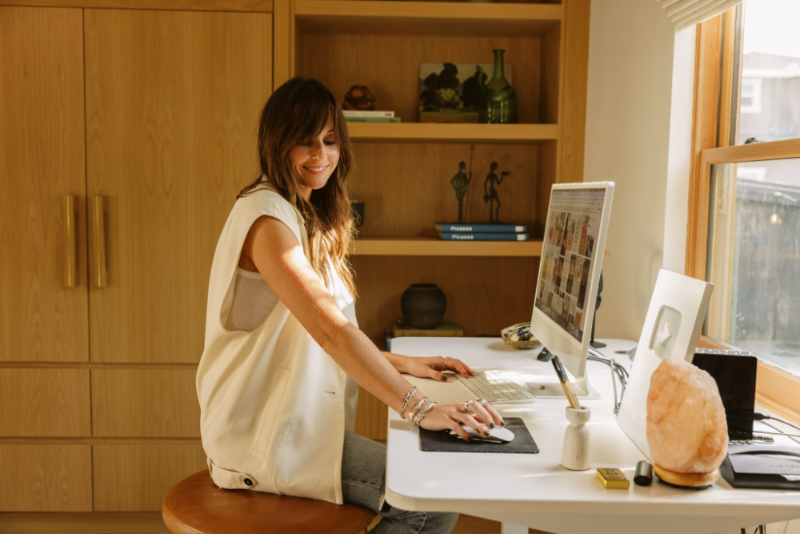
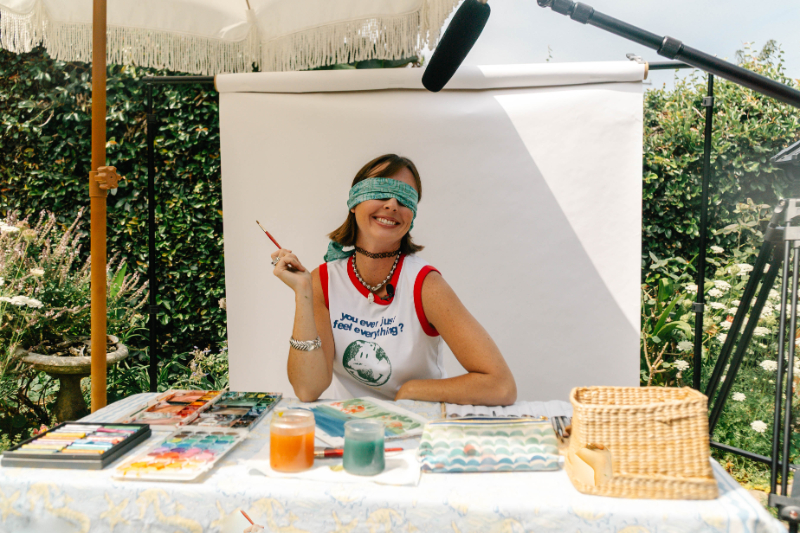
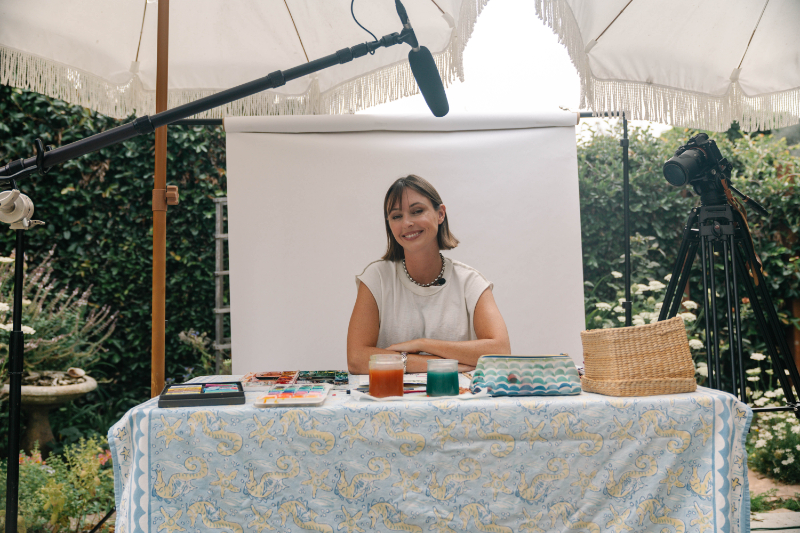
Before we get started, hi, I'm Jenna Rainey. A self-taught watercolor artist, author of the Everyday Watercolor series, and someone who's been teaching people to paint since 2012. I've helped millions of folks pick up a brush for the first time on YouTube, in books, and in my courses.
The Short Answer
Digital art is made by a human, stroke by stroke, using digital tools. AI art is generated by software that was trained on huge datasets and responds to a text prompt. The difference isn't the screen. It's whose hand and whose choices made the marks.
That's the whole thing in two sentences. Everything below is the nuance.
Why This Debate Matters if You're Still Learning
Here's my concern with all of this noise. It isn't the working illustrators I worry about most, because they're already deep in the conversation. It's the beginner.
It's the person who finally bought a set of paints in January. The one who's been meaning to start for six years. When your feed is full of flawless generated images, it's easy to think what's the point? before you've even made your first ugly wash.
So this isn't an abstract tech debate. It changes how people feel about picking up a brush at all, and that's worth being clear-headed about.
What Is Digital Art, Actually?
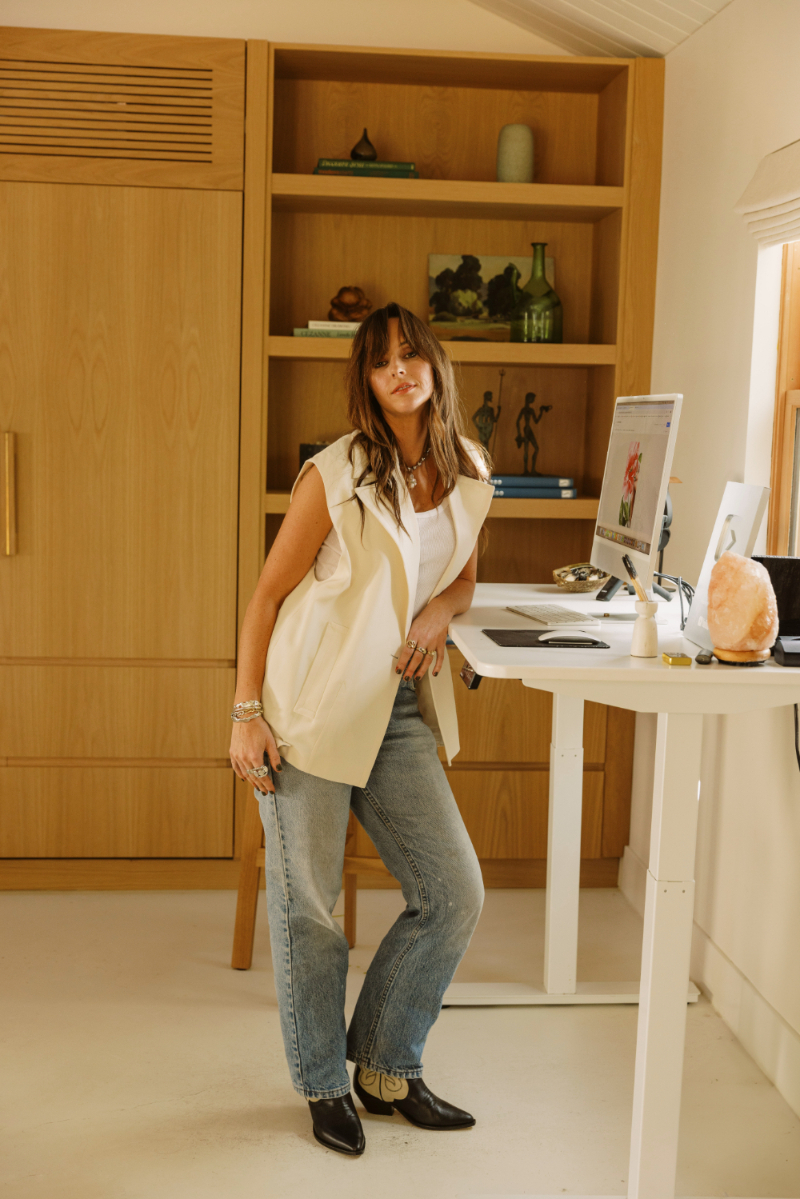
Digital art is art a person makes using digital tools. Think Procreate on an iPad, Photoshop, Clip Studio Paint, a Wacom tablet.
Every line is drawn by a human. Every color is chosen by a human. The artist still needs to understand value, edges, composition, and color relationships. They still build muscle memory. They still have bad days where the drawing fights back.
The tool changed. The skill did not. A digital artist and I are solving the same problems, just with different equipment. When I teach watercolor techniques, I'm teaching decisions, and those decisions transfer.
Worth remembering: digital art used to get the exact same side-eye. Painters called it cheating. Then it became the backbone of animation, publishing, and game design. History has a sense of humor.
What Is AI Art, Actually?
AI art is an image produced by a generative model. You type a description, and the software returns an image based on patterns it learned from an enormous training dataset.
The most-discussed dataset in the visual art world is LAION-5B, a collection of billions of image and text pairs scraped from the open web. That detail matters, and I'll come back to it.
The human input here is the prompt, plus whatever selecting, editing, or arranging happens afterward. That's a real workflow. It's just a fundamentally different one from drawing.
AI Art vs Digital Art: Four Differences That Actually Matter
1. The process
A digital artist builds an image over time through hand and eye coordination. An AI user describes an outcome and refines the description. One is making. One is directing.
2. The practice curve
Getting good at painting takes repetition. Hundreds of hours of it. Getting a better AI output takes iteration on wording. Both take effort, but only one builds a physical skill that lives in your body.
3. Authorship
This is where it gets legally interesting, and this part is settled enough to state plainly.
The U.S. Copyright Office concluded in its January 2025 report that fully AI-generated outputs produced from a prompt don't meet the human authorship requirement for copyright.
Your hand-painted work is yours the moment you make it. A prompt-generated image, on its own, isn't. (I'm an artist, not a lawyer, so talk to an actual attorney about your specific situation.)
4. The story behind it
When you paint something, there's a record. You remember the day. You remember the part you almost gave up on. That's not sentimental fluff, it's the thing that makes work feel like yours, and it's a real part of how you find your personal style.
Is AI Art Cheating? Is It Even Art?
I'm going to give you both sides honestly, because I don't think you need me to hand you a verdict.
What artists are genuinely worried about
- Consent. In January 2023, artists Sarah Andersen, Kelly McKernan, and Karla Ortiz filed a class action against Stability AI, Midjourney, and DeviantArt over the use of their work in training data. That case is still active as of 2026.
- Income. Illustrators are seeing commercial jobs shrink or change.
- Attribution. “In the style of [living artist]” prompts feel different from being inspired by someone.
These aren't hypotheticals. Real people are affected, and dismissing that would be lazy.
The case on the other side
- New tools have always been called cheating first. Photography got it. Digital art got it.
- Plenty of artists use AI for moodboards or reference and then paint the actual piece themselves.
- Prompting well takes visual judgment, even if it's a different kind.
I'll be straight with you about where I land. I've poked at these tools out of curiosity, and I'm still skeptical. I don't think AI art is evil, and I don't think it's a replacement.
I broke my full reasoning down in The Pros and Cons of AI Art, including the parts I couldn't fit here (the environmental cost, the job displacement side, and why “efficient” was never the goal with art anyway). Go read that one if you want the long version.
But you don't have to land where I did. I'd rather you think it through than pick a side fast.
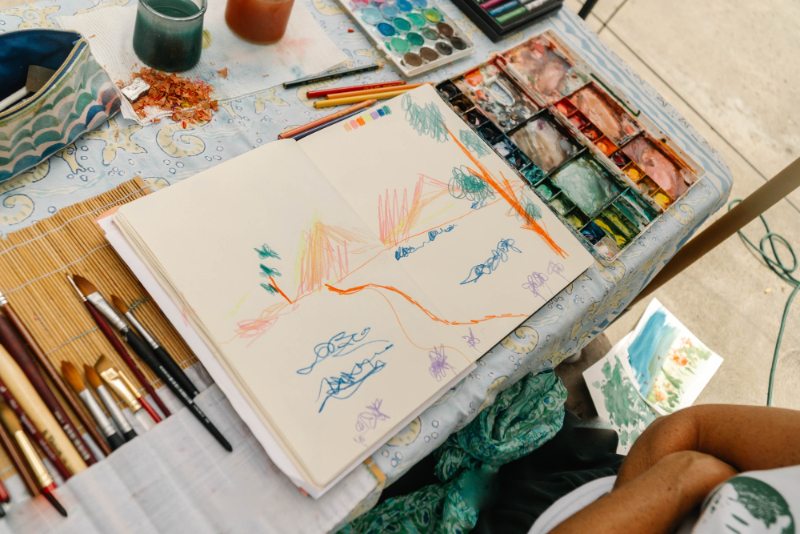
So Where Does That Leave You?
Right where you were. Painting.
Nothing about AI existing makes your practice less valuable. If you paint because it calms you down, that reason is untouched. No generated image has ever lowered anyone's heart rate the way twenty minutes with a brush does.
Do what fits you:
- Curious about the tools? Try them. Curiosity isn't betrayal.
- Want to stay fully traditional? Great. That's a complete answer.
- Feeling stuck and comparing yourself? Get off the feed and go make something.
My motto has never been create something perfect. It's create something every day even if it sucks. The point was always the practice. That still holds.
FAQ
Can you copyright AI-generated art?
Not the purely AI-generated parts. The Copyright Office requires human authorship, and the Supreme Court left that standard standing in March 2026. Human-made elements and creative arrangement can still qualify.
Will AI replace artists?
Nobody honestly knows. What I can tell you is that hand-skill, teaching, and personal connection to a body of work aren't things a prompt reproduces.
Is using AI as reference okay for beginners?
That's your call. Just know AI images often get anatomy, perspective, and botanical structure wrong. Real photos and real observation teach you more.
Do I need to learn digital art to stay relevant?
Nope. If watercolor is what you love, that's enough. Plenty of working artists have never touched a tablet.
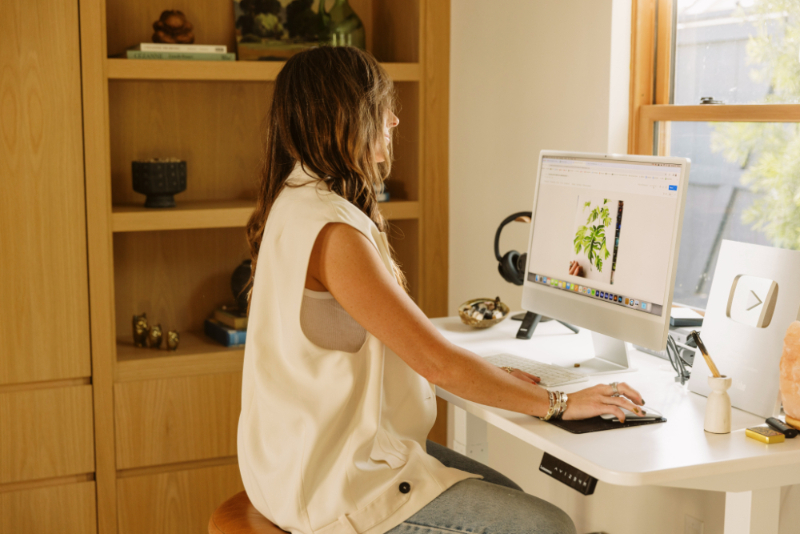
One Last Thing
This doesn't need to be a war. Community over competition has always been the better play, and that includes being generous with people who make different choices than you.
Your creative voice came from practice. From actual hours. From messing up a wash and doing it again. That's not something anyone can prompt their way into.
If you want more honest conversations like this one, join my email list. I send real talk, creative encouragement, and the occasional supply obsession every week. (No hype. Promise.)
And if you're feeling stuck right now, start with the free Creative Recovery Challenge. Three days, zero pressure, back to the brush.






+ show Comments
- Hide Comments
add a comment