






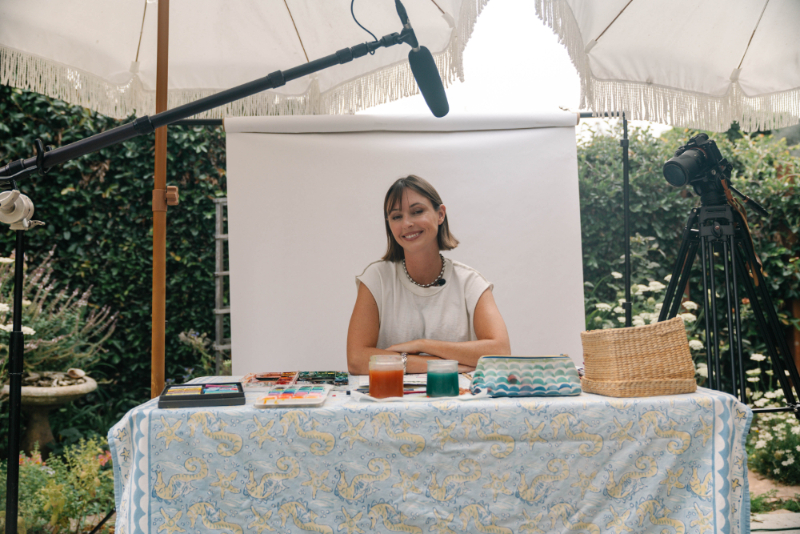
Hey friend. There's a painting sitting in front of you right now, and you've already decided it's garbage.
Maybe the petals went muddy. Maybe your sky dried with a hard line you never asked for. Or maybe it just looks off and you can't explain why.
I've been there more times than I can count. (My recycling bin has seen things.)
Here's the part that actually helps: hating your work usually points to something specific. And specific problems have specific fixes.
Short answer: when you hate everything you paint, the best watercolor practice ideas are small, repeatable, and low-pressure. Paint the same subject for five minutes a day. Drill one technique for a month. Warm up with basic shapes before you paint anything “real.” And once in a while, paint with no reference photo at all. Below, I'll match each fix to the reason it works.

Hey, I'm Jenna
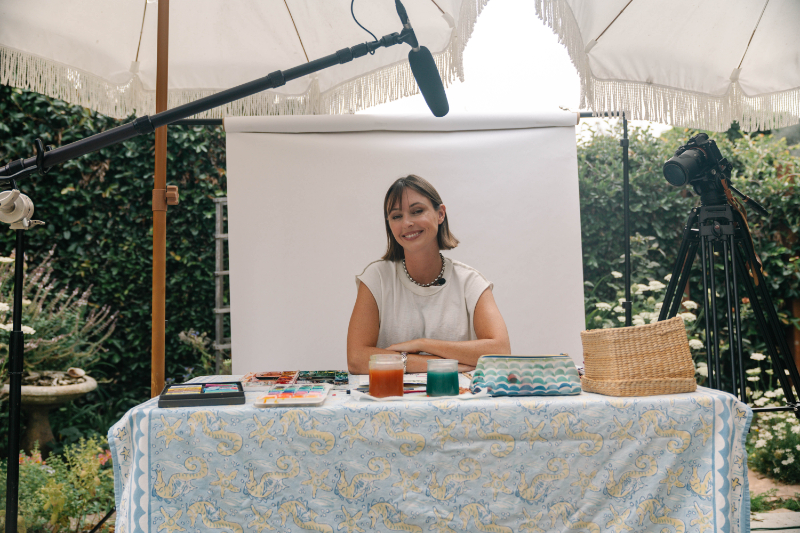
I'm a self-taught watercolor artist, designer, and mom who fully believes it's never too late to try something creative.
I've taught millions of people how to paint through my YouTube channel and my Everyday Watercolor book series with Penguin Random House. I've been doing this since 2012, and my motto hasn't changed once: create something every day even if it sucks.
If you want me walking you through it step by step, my courses are right here. Want to chat about a collaboration or ask a question? Come say hi on Instagram.
First: This Feeling Is Normal (Even for Professional Artists)
I still make paintings I don't like. Regularly.
The difference is that I stopped treating a bad painting as evidence about me. It's just information about that painting.
So before we get into watercolor practice ideas, take the pressure off. You're allowed to make ugly things. That's literally the job description of a beginner (and, honestly, of a working artist too).
Now let's figure out which of these five reasons is yours.
Reason #1: You're Comparing, Not Creating
You scroll for ten minutes. Then you sit down to paint. Suddenly your loose florals look like a toddler's snack.
Comparison messes with your eyes. You start judging a five-minute study against someone's fiftieth attempt at the same subject.
Try these:
- Put your phone in another room while you paint. Not face down. Another room.
- Keep a “private” sketchbook nobody sees. No posting allowed.
- Follow fewer artists in your exact style for a month.
- Paint one subject you've never seen on your feed.
I talk about this and four other turning points in my video on how my art went from bad to good. Watch it while you swatch some colors.
Reason #2: You Haven't Given Yourself Enough Reps Yet
This one stings, but it's the most fixable.
Watercolor runs on muscle memory. Your hand has to learn how much water to load, how fast the pigment moves, and when to stop touching the paper. That knowledge doesn't come from reading. It comes from reps.
Here are the watercolor exercises I'd start with:
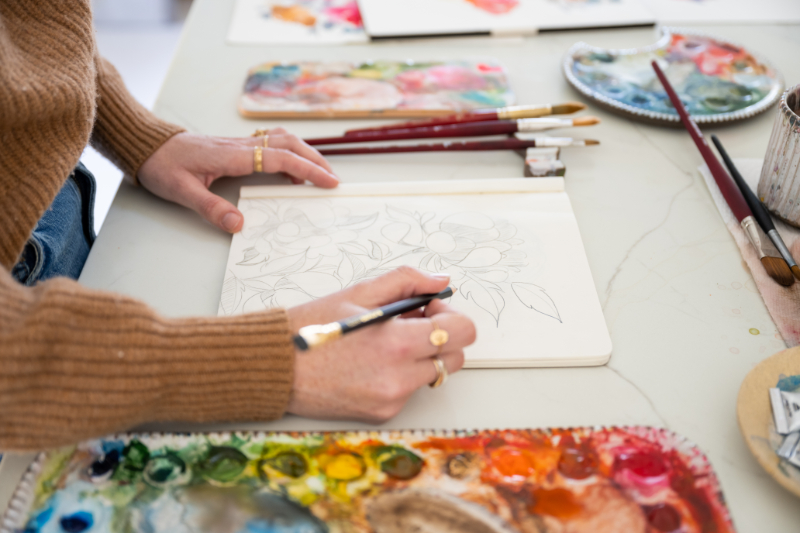
- Paint the same subject daily. Five to fifteen minutes. One parakeet, one poppy, one lemon. Date each one.
- Set a monthly goal. Pick one thing (like wet on wet skies or realistic petal edges) and stay there all month.
- Do simple watercolor exercises for beginners. Flat washes, gradients, and a water-control ladder from soupy to nearly dry.
- Add daily drawing exercises. Break complex subjects into circles, cones, and boxes before any paint touches paper.
Stack thirty of those tiny paintings side by side at the end of a month. That's when you'll see it.
I broke this into four doable challenges in this video.
Reason #3: You're Missing Technique, Not Talent
For years I thought I was just plopping paint and hoping. My work changed when I actually studied the foundations: color theory, brush control, and how water behaves on paper.
Two things worth checking:
Your technique. Do you know why your colors go muddy? (Usually it's mixing complements or painting into a layer that's still damp.) Do you know the difference between wet on wet and wet on dry? These are learnable in an afternoon.
Your supplies. When I switched from cheap hobby paints to artist-grade watercolor and 100% cotton paper, my results changed fast. Student-grade paper especially will fight you. It buckles, it pills, and it won't let pigment move.
My free 40-page beginner's guide covers supplies, techniques, color theory, and composition in one place. It's the fastest way to close a technique gap.
Want my actual supply list? It's all here.
And if you want the full progression, Everyday Watercolor walks you through 30 days of foundational strokes and skill-building. The Companion Course is the video version of that, with me painting alongside you.
Reason #4: You're Stuck in Your Head, Not Your Hands
Some days the problem isn't skill. It's that your brain won't get out of the way.
Psychologist Mihaly Csikszentmihalyi named this the opposite of flow, that absorbed state where self-criticism goes quiet and you just work. (His TED talk on flow is worth eighteen minutes of your life.)
You can nudge yourself into it.
- Draw tiny circles for two minutes before you start. Boring on purpose. It settles the mind.
- Set the environment. Clear the table, cue a playlist, close the tabs.
- Time-box it. Twenty minutes, one page, no outcome required.
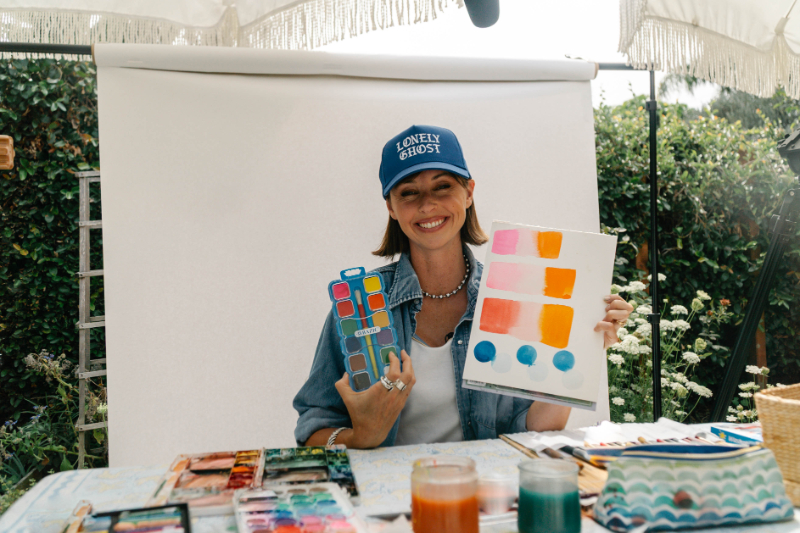
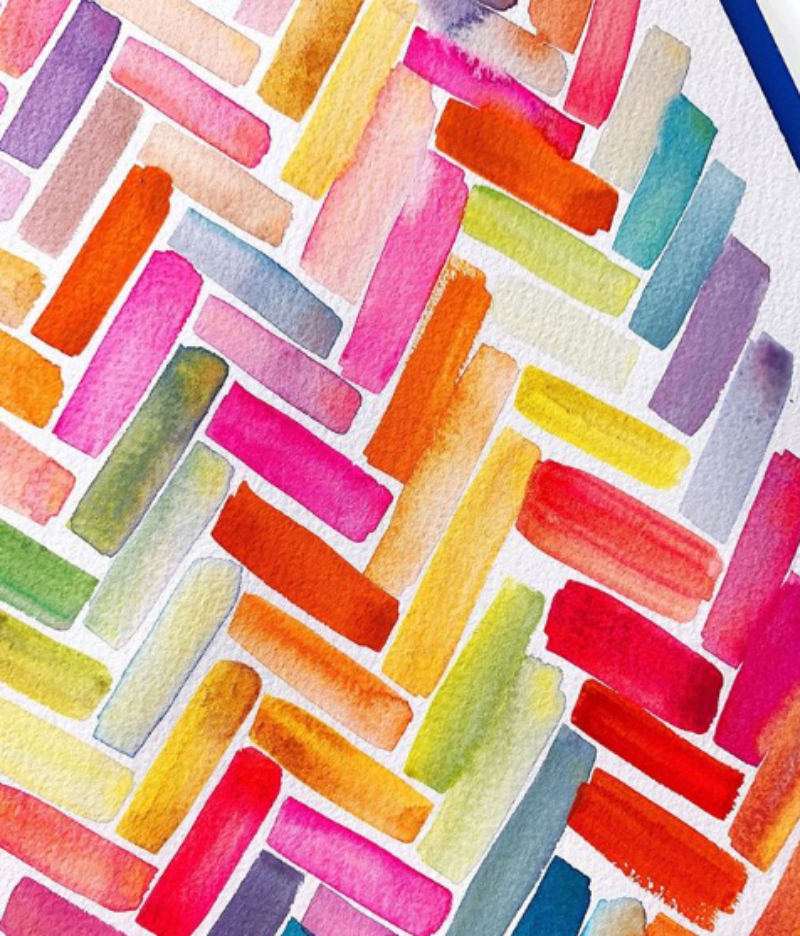
- Start with a warm-up you can't fail. Stripes, dots, blobs, ombré swatches.
More on this in my video about improving without traditional practice.
Reason #5: You Haven't Gotten “Unplugged” in a While
If every painting you make starts with someone else's photo, your work will start to feel borrowed. That's usually what people mean when they say a piece feels lifeless.
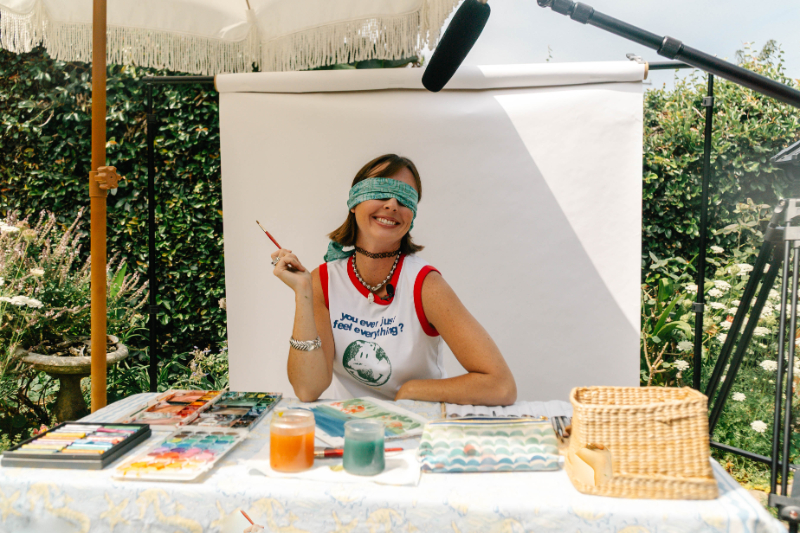
Once a month, paint from within. No reference photo, no Pinterest, no tutorial. Just color you like and shapes that feel good.
It's uncomfortable at first. It's also how you find your personal style.
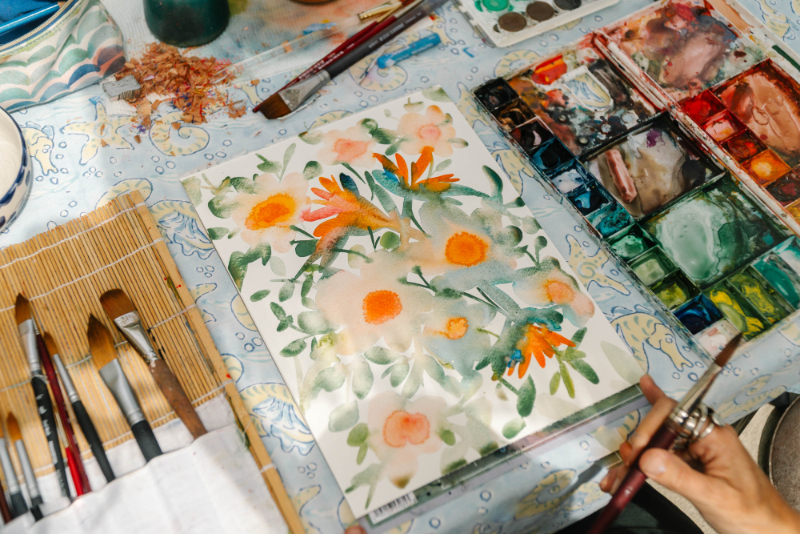
Putting It Together: You Don't Have to Fix Everything at Once
Please don't try all five. You'll burn out by Thursday.
Pick the one that made you wince while reading. Then run a week like this:
- Monday through Friday: ten minutes on the same subject.
- One day: a fifteen-minute technique drill (washes, edges, water control).
- One day: paint with no reference, no phone, no plan.
That's under two hours a week. It works because it's repeatable, which is the whole point of good watercolor practice ideas.
Want deeper feedback while you do it? My Patreon community includes personalized art reviews at the top tier.
Watercolor Practice FAQ
How long should I practice watercolor each day?
Ten to fifteen minutes is plenty when you're consistent. Short daily sessions beat one long session on Sunday, because water control is a physical skill.
How long does it take to get good at watercolor?
It depends on your reps, not your calendar. Someone painting fifteen minutes daily will pass someone painting three hours a month. Expect real change over months, not weeks.
What should I paint when I have no ideas?
Paint what's in front of you. A mug, a lemon, a leaf from your yard. Boring subjects are great practice because you're focused on skill instead of the result.
Is it cheating to use reference photos?
Nope. Reference builds accuracy. Just balance it with occasional no-reference sessions so you build intuition too.
Do I need expensive supplies to practice?
Not for drills. But upgrade your watercolor paper first if you upgrade anything. Cotton paper changes how paint behaves more than any brush will.
Should I keep the paintings I hate?
Yes. Date them and stash them. They become your progress record, and future you will be weirdly grateful.
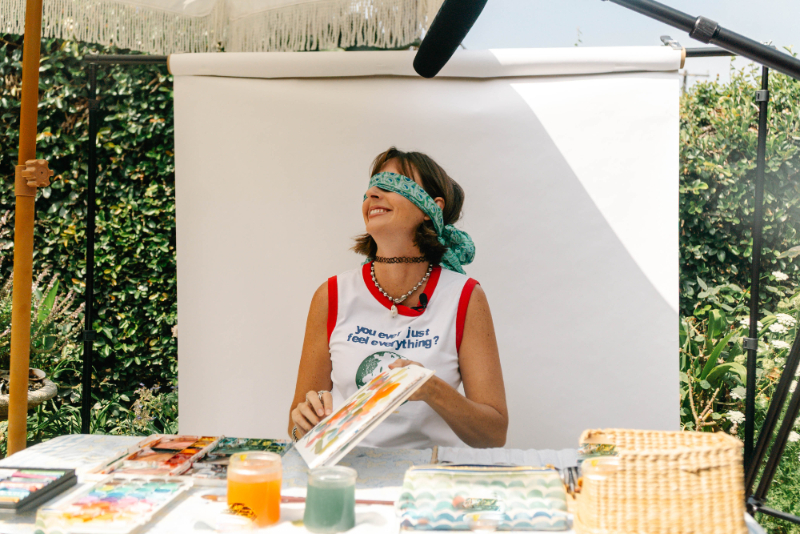
One Last Thing, Friend
Hating your painting isn't a sign you should quit. Usually it means you've grown enough to see the gap between what you made and what you pictured. That gap closes with reps.
So go paint something small today. Set a timer for ten minutes. Let it be bad.
Create something every day even if it sucks. I mean it.
Ready for a real plan? Start with my free 40-page beginner's guide. It covers supplies, techniques, and color theory so your practice sessions actually build on each other.
And if you want weekly ideas landing in your inbox, come join my email list. Let's be friends.








+ show Comments
- Hide Comments
add a comment