




Hey friend! What if the best thing you could do for your art today was to stop looking at it?
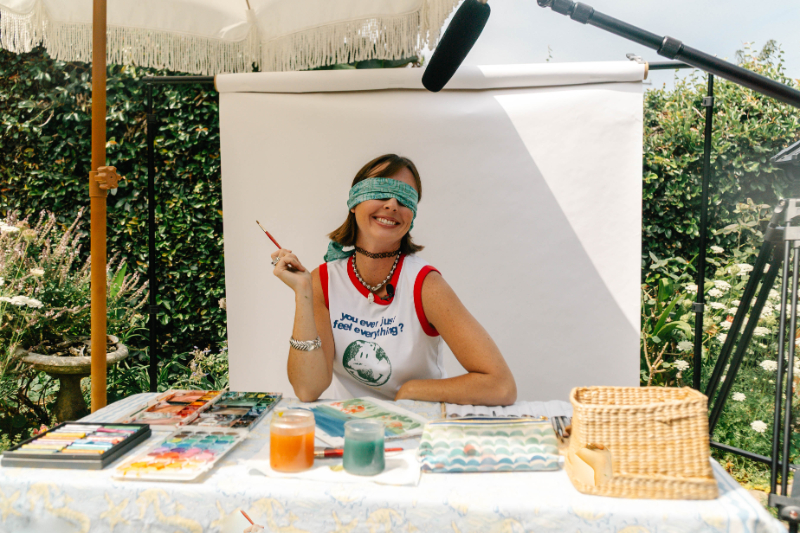
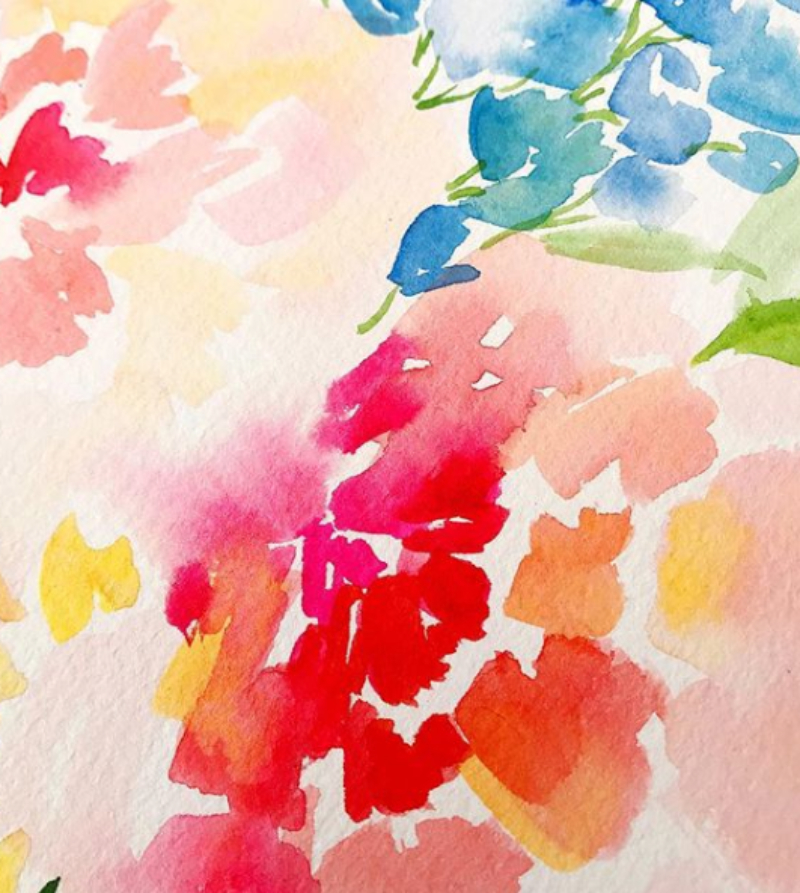
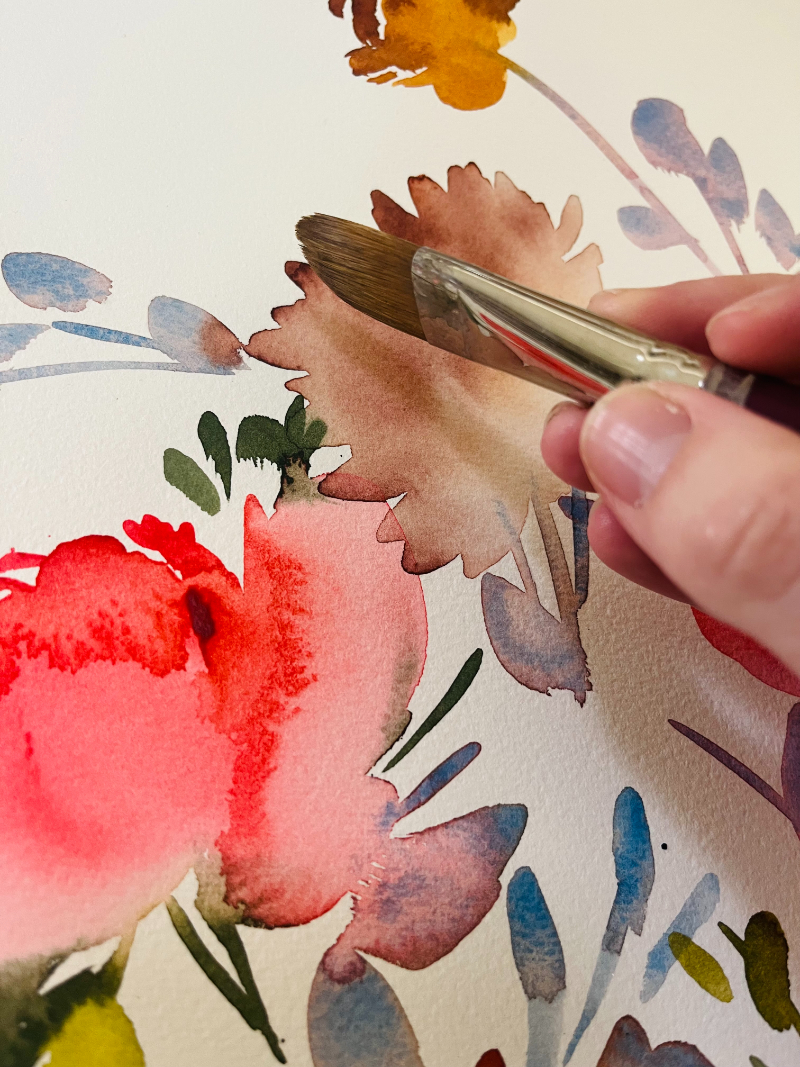
I'm serious. I recently painted a full watercolor floral piece completely blindfolded. No peeking. No correcting. Just brush, paint, paper, and whatever my hands already knew. Then I did it again with colored pencils. Both times, the results were loose, expressive, imperfect, and (here's what surprised me) weirdly cohesive. Both rounds showed me what's actually happening underneath a painting: the intuition and muscle memory that visual feedback usually drowns out.
The blindfold challenge is now a full series on my YouTube channel because one attempt wasn't enough. It turned out to be one of the most useful watercolor exercises in my practice for bypassing perfectionism and reconnecting with instinct. And I want you to try it too.
Watch both videos here:
In this post, I'm covering the why behind the blindfold art challenge, what I discovered in each video, and how to try it yourself.
Quick Hello If We're New Friends
I'm Jenna Rainey, a self-taught artist, author of the Everyday Watercolor book series, and hell-bent on teaching everyone how to find their inner creative voice. Since 2012, I've helped millions of people learn watercolor through my YouTube channel, online courses, and books. Want to work together or just say hi? Reach out here.
But… Why Paint Blindfolded?
Fair question. Blind contour drawing (sketching without looking at your paper) is a real art school exercise. It forces your hand to follow what your eye observes instead of what your brain assumes. The blindfold challenge takes that one step further: you're not looking at anything. It's all feel, memory, and instinct.
What you're actually training is muscle memory, spatial intuition, and the ability to commit to a mark without second-guessing it. Those are the exact qualities that separate loose, alive paintings from tight, overworked ones.
Here's the bonus: it's almost impossible to be precious about a painting you can't see. You let go before the brush even touches the paper. And if you've read my post on why perfectionism is bad for creativity, you know letting go is the skill so many of us spend years chasing. The blindfold just does it for you. (It's also a sneaky shortcut to flow state.)

What the Blindfold Watercolor Challenge Taught Me
Four things stood out from the first video.
1. Your palette is your compass (if you know it).
I'd been using the same watercolor palette for 12 years when I filmed this, and that's what made the whole thing possible. Without sight, the layout of my palette became my navigation system. Cool blue to the left, warm yellow to the right, neutrals down below. That fluency only comes from years of consistent placement. If you try this and keep landing in the wrong well, that's not a failure. It's information. Now you know exactly what to practice.
2. Your other senses know more than you think.
Without my eyes, I leaned on sound and touch. The drag of bristles on textured paper. The brush in the water cup. The resistance of a loaded brush versus a dry one. My Tea to Butter consistency framework is usually taught visually, but the physical sensation carries the same information once you learn to read it. Training that sensitivity makes you a better painter at any level, blindfold or not. (New to Tea to Butter? Start with Color Mixing for Beginners.)
3. Imperfection has its own coherence.
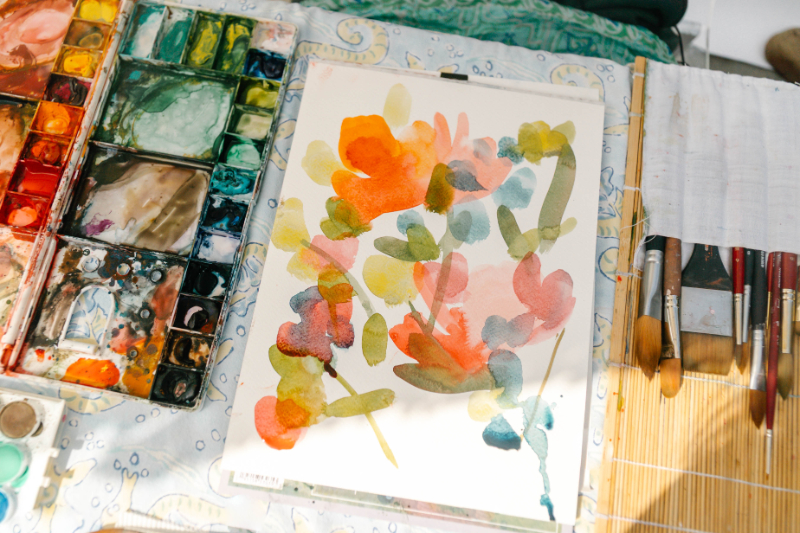
My honest verdict on the finished piece: the stems were hideous. Some colors landed in the wrong place. But the composition held together, loose and full of momentum, because every stroke was decisive. It had to be. By removing my ability to correct, the blindfold removed my tendency to overcorrect. Next time you go back over a stroke that was already fine, ask whether you're improving it or erasing its energy.
4. Painting is physical.
Removing visual feedback shifted all my attention to the body of the process. The weight of the brush. The texture of the paper. When I took the blindfold off, my hands felt more confident, and I noticed things I'd been skipping past for years. That shift carries into sighted painting, which is why I keep the blindfold challenge in rotation. (It's also how muscle memory becomes personal style, which I dig into in Tips for Finding Your Artistic Style.)
Round Two: The Colored Pencil Blindfold Challenge
The second video swapped watercolor for colored pencils, and it became a different exercise entirely. Watercolor blindfolded is about surrendering control over how paint behaves. Drawing blindfolded is about surrendering control over line and form. Colored pencil is normally a precise medium, so taking away sight turns it into something whimsical and scribbly.
A few things I learned:
- Touch becomes the navigation system. I found my green pencils by the ridges on their barrels. The rest stayed a mystery until the reveal, and that mystery is the point. When you don't know what color you're holding, you stop curating and start making.
- The starting point is everything. I established a central stem before anything else, and it became the anchor everything radiated from. I also kept my pencil on the page, tracing back over lines to stay connected. That transfers straight to sighted drawing: connected, continuous marks hold a composition together better than start-stop ones.
- Childlike is a feature, not a flaw. The finished piece looked like something between a journal cover and a textile print. Wobbly, playful, spontaneous. That's the exact aesthetic perfectionism suppresses hardest, and it's the same quality that makes folk art and so much contemporary illustration compelling. Making something childlike on purpose is a big deal for anyone who's spent years trying to “get better.” (More on that in Permission to Play.)
Five Ways to Try the Blindfold Challenge
You don't need my exact setup. Pick your entry point:
- The full blindfold watercolor. Eyes covered start to finish. Best if you know your palette well. Loose watercolor flowers are the perfect subject.
- The blindfold drawing. Colored pencils, pen, or marker. Anchor point first, tool stays on the page, color stays a surprise.
- The five-minute warm-up (most beginner-friendly). A mini blindfold challenge: marks, washes, and brushstrokes with no subject and no goal, right before a regular session.
- The eyes-closed sketch + paint. Sketch a simple subject with eyes closed, then open them and paint over it. The sketch's wobble becomes the painting's character.
- The reveal race. Two or more people paint the same subject blindfolded, then reveal at the same time. Always funny, always surprising. (Perfect for a watercolor paint night.)
Your First Blindfold Challenge: Quick-Start Guide
What you need:
- Watercolor paper or a sketchbook page (scrap is totally fine)
- Your regular palette, already set up, or a colored pencil set
- 1 or 2 brushes, water, and paper towels
- A blindfold: a sleep mask, a folded scarf, anything that blocks light
Before the blindfold goes on: choose a simple subject like a loose floral or an abstract wash. Nothing with tight proportions. Spend 30 seconds locating your colors by feel.
During: breathe, and let go of the outcome before you begin. Drawing? Set your anchor point first and keep your tool on the page. Painting? Trust the feel of the brush. And resist the peek. The peek defeats the entire exercise.
The reveal: look from across the room first and notice what reads well before zooming in on what went “wrong.” Then ask: what did my hands do when my brain wasn't supervising? Don't fix anything. Leave it exactly as it came out.
Make It a Habit, Not a Novelty
The blindfold challenge works best as a recurring reset. Reach for it when your paintings start feeling tight, when you're staring down a creative block, or on the first page of a new sketchbook. Eventually you won't need the blindfold to access the freedom. That's the whole point.

Go Paint Something You Can't See
The best creative breakthroughs rarely come from doing things better. They come from doing things differently, sometimes even doing them badly on purpose with a sleep mask on your face. What the blindfold challenge keeps proving, video after video, is that your hands know things your eyes keep interrupting.
So try it this week. Grab a scrap of paper, cover your eyes, and give it twenty minutes. Then tag me on Instagram with your reveal, or share it inside my Patreon community. The reveal photos are genuinely my favorite thing.
If this experiment has you itching to learn watercolor for real, grab my free Complete Beginner's Guide to Watercolor e-book. Ready to go deeper into style and instinct? That's exactly what we do inside The Art Within.
Now go create something today. Even if it sucks. Especially if you can't see it.









+ show Comments
- Hide Comments
add a comment